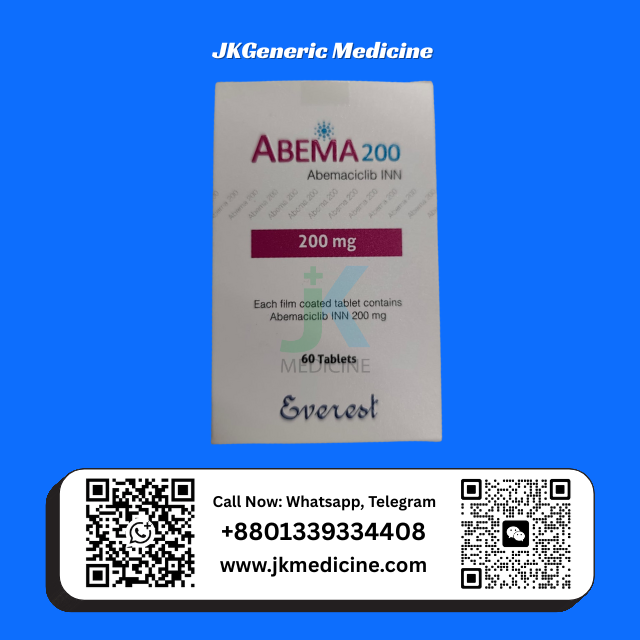
Abema 200 Mg (Abemaciclib INN)
Abema 200 mg contains Abemaciclib, an orally administered targeted anticancer medicine belonging to the class of cyclin-dependent kinase (CDK) 4 and 6 inhibitors. It is widely used in the treatment of specific types of breast cancer, particularly hormone receptor-positive (HR+), human epidermal growth factor receptor 2-negative (HER2–) advanced or metastatic breast cancer. Abemaciclib works by blocking the activity of CDK4 and CDK6 enzymes, which play a key role in promoting cancer cell division and tumor growth.
How Abema 200 mg Works
Normal cells grow and divide in a controlled way, but cancer cells multiply uncontrollably. CDK4 and CDK6 are enzymes that regulate the cell cycle, helping cells move from the growth phase to the division phase. Abemaciclib inhibits these enzymes, causing the cancer cells to stop progressing through the cell cycle. As a result, tumor cell growth is slowed or stopped, and in many cases, cancer cells undergo programmed cell death.
Indications and Uses
Abema 200 mg is primarily prescribed for:
HR-positive, HER2-negative advanced or metastatic breast cancer
Use as a single agent in patients who have previously received hormone therapy and chemotherapy
Use in combination with endocrine therapy such as aromatase inhibitors or fulvestrant
This medication is often chosen because of its ability to provide sustained disease control while allowing patients to continue daily activities due to its oral administration.
Dosage and Administration
Abema 200 mg tablets are taken by mouth, usually twice daily, with or without food, as directed by an oncologist. The tablet should be swallowed whole with water and should not be crushed, split, or chewed. The exact dosage schedule may vary depending on the patient’s condition, tolerance, and response to treatment. Dose adjustments may be necessary if side effects become severe.
Benefits of Abema 200 mg
Targets cancer cells at the molecular level
Helps slow the progression of advanced breast cancer
Can be used alone or in combination therapy
Oral administration allows convenient at-home treatment
Proven to improve progression-free survival in many patients
Possible Side Effects
Like all cancer medicines, Abema 200 mg may cause side effects, although not everyone experiences them. Common effects include diarrhea, fatigue, nausea, vomiting, decreased appetite, abdominal pain, and hair thinning. Some patients may develop low blood counts, which can increase the risk of infections or anemia. Regular blood tests are necessary to monitor liver function and blood cell levels.
Patients should immediately report persistent diarrhea, fever, unusual bleeding, shortness of breath, or severe fatigue to their healthcare provider.
Precautions and Warnings
Abema 200 mg should only be used under the supervision of a qualified cancer specialist.
It may interact with certain medications, including strong CYP3A inhibitors or inducers.
Patients with liver or kidney problems may require dose modification.
Pregnancy must be avoided during treatment as it may harm the unborn baby.
Breastfeeding is not recommended while using this medication.
Storage Instructions
Store Abema 200 mg tablets at room temperature, away from excess heat and moisture. Keep the medicine out of reach of children and pets, and always check the expiration date before use.
Conclusion
Abema 200 mg (Abemaciclib INN) represents a major advancement in targeted therapy for hormone receptor-positive breast cancer. By inhibiting CDK4 and CDK6 it disrupts cancer cell growth at its core, offering improved disease control and a better quality of life for many patients. With proper medical supervision and adherence to prescribed dosing, Abema 200 mg can play a vital role in long-term cancer management.