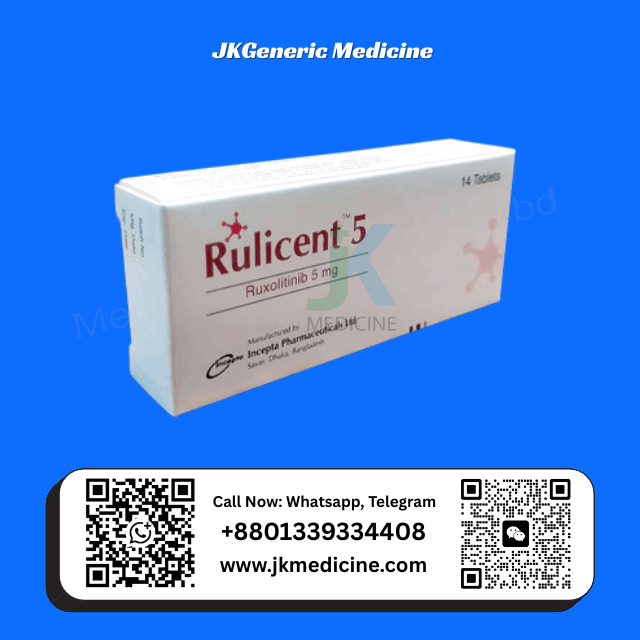
Rulicent 5 mg (Ruxolitinib)
Rulicent 5 mg contains Ruxolitinib, a targeted treatment that falls under the Janus Kinase (JAK) inhibitor group. Doctors use it to tackle certain blood disorders and inflammatory issues. It works by blocking faulty signals in the body—basically, it stops the messages that drive disease forward. This means people taking Rulicent often see their symptoms ease up and get a better grip on day-to-day life.
Active Ingredient and Drug Class
The main ingredient here is Ruxolitinib. It targets and blocks two enzymes, JAK1 and JAK2, which usually help pass along signals from things like cytokines and growth factors. These are the signals that tell your immune system and blood cells what to do. In some diseases, these pathways go into overdrive and cause all sorts of problems, from inflammation to out-of-control cell growth. Ruxolitinib steps in and quiets that chaos, helping the body find its balance again.
Why Doctors Prescribe Rulicent
Doctors usually reach for Rulicent 5 mg when treating:
- Myelofibrosis (primary or secondary)
- Polycythemia Vera (especially if other treatments don’t work or aren’t tolerated)
- Graft-versus-Host Disease (in certain cases)
- Some inflammatory or autoimmune conditions (under specialist care)
For myelofibrosis, it shrinks an enlarged spleen and eases symptoms like fatigue, night sweats, and bone pain. When it comes to polycythemia vera, it keeps blood cell counts under control and cuts down on complications.
How It Works
Ruxolitinib blocks the JAK-STAT pathway—the main system that ramps up immune activity and cell growth. In blood disorders, this pathway often gets stuck in “on” mode. By shutting down JAK1 and JAK2, Rulicent:
- Lowers inflammation
- Slows down abnormal cell growth
- Reduces extra cytokine production
- Helps the immune system stay on track
This approach means Rulicent works right at the source, not just masking symptoms.
How to Take Rulicent
You take Rulicent 5 mg as a tablet, usually once or twice a day, depending on what your doctor decides. You can swallow it with water, with or without food. The dose might change based on your blood test results or how you’re feeling, so doctors keep a close eye on things like blood counts and liver function. Don’t ever change your dose on your own.
Benefits You Can Expect
Rulicent 5 mg can make a real difference. It shrinks an enlarged spleen in myelofibrosis, boosts energy, improves overall well-being, and gets blood levels under control. Many people notice improvements just a few weeks after starting. It’s become a go-to for targeted treatment.
Side Effects—What to Watch For
Like any medicine, Rulicent can cause side effects, though not everyone gets them. The most common are:
- Lower blood cell counts (like anemia or low platelets)
- Headaches, dizziness
- Tiredness
- More frequent infections
- Bruising or bleeding
Sometimes, more serious problems pop up, like severe infections or changes in liver function. That’s why regular checkups are so important. If you get a stubborn fever, unusual bleeding, or feel unusually weak, call your doctor right away.
Precautions and Things to Tell Your Doctor
Before starting Rulicent, let your doctor know if you have:
- Any current infections
- Liver or kidney problems
- A history of tuberculosis
- Other medications in your routine
- Are pregnant or breastfeeding
Because Ruxolitinib calms down parts of your immune system, you might get infections more easily. Good hygiene and regular check-ins are key.
Storing Rulicent
Keep the tablets at room temperature, in a dry spot, away from sunlight, and out of reach of kids. Leave them in their original packaging until you need them to make sure they stay effective.
Conclusion
Rulicent 5 mg (Ruxolitinib) is a modern therapy for tough blood and immune disorders. By blocking JAK1 and JAK2, it calms down runaway inflammation and abnormal cell activity. With the right medical supervision and regular follow-up, this medicine can ease symptoms, slow down disease, and help people feel better day-to-day.