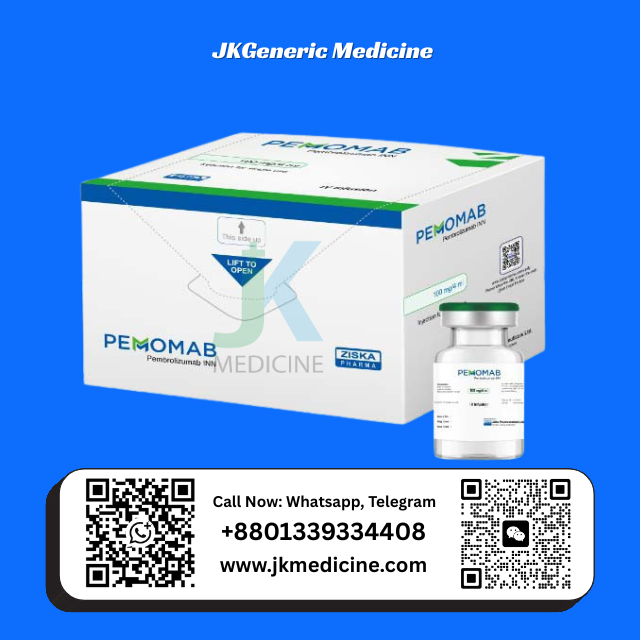
Pemomab 100 mg (Pembrolizumab)
Pemomab 100 mg is a pharmaceutical expression of the new monoclonal antibody pembrolizumab, which holds a prominent place in cancer immunotherapy. Pembrolizumab is ananti-PD-1 (programmed death- 1) vulnerable checkpoint asset, whose medium of action is to allow the vulnerable system to more effectively descry and attack cancer cells. Pemomab 100 mg is used generally in the treatment of colorful cancers, includingnon-small cell lung cancer( NSCLC), carcinoma, head and neck scaled cell melanoma( HNSCC), classical Hodgkin carcinoma( cHL), among others. It's administered intravenously and is a foundation in the field of immuno- oncology.
Mechanism of Action
Pemomab( Pembrolizumab) works by binding to and enwrapping the PD- 1 receptor on T cells. In normal situations, PD- 1 binds with its ligands (PD- L1 and PD- L2) expressed on specific cells, similar as cancer cells, and transmits an" off" signal that prevents T cells from responding. The maturity of excrescences overexpress PD- L1, which allows them to shirk vulnerable surveillance. Blocking this commerce restores T cell function, enabling the vulnerable system to fete and destroy cancer cells.
Indications
Pemomab 100 mg is used in the treatment of cancers, particularly in cases with no other treatment response or are n't suitable campaigners for conventional chemotherapy. The main suggestions are
Non-Small Cell Lung Cancer( NSCLC) – First- or follow- up remedy in cases with high PD- L1 expression or after failure of chemotherapy.
Carcinoma – Unresectable or metastatic carcinoma.
Head and Neck Scaled Cell Melanoma( HNSCC) – In metastatic or intermittent cases.
Classical Hodgkin Lymphoma( cHL) – Particularly in regressed or refractory cases.
Urothelial Carcinoma – Advanced bladder cancer in certain cases.
Microsatellite Insecurity-High (MSI- H) or Mismatch Repair Deficient( dMMR) Excrescences – Like colorectal and other excrescences.
Cervical Cancer – Advanced or intermittent cases.
Esophageal and Gastric Cancers – If PD- L1 expression is present.
The specific use differs by excrescence type, PD- L1 status, and previous treatment history.
Dosage and Administration
Pemomab 100 mg is administered as an intravenous (IV) infusion over roughly 30 twinkles, generally every six or three weeks grounded on the authority. It's used alone (monotherapy) or in combination with other chemotherapy treatments or targeted curatives.
Usual dosing 200 mg every 3 weeks, or mg every 6 weeks.
Still, in the case of Pemomab 100 mg, this is in the form of a number of vials per cure depending on the treatment authority specified. Treatment may last anywhere from a many months to two times or until there's substantiation of complaint progression or inferior toxin.
Side Effects
Like all important medicines, Pemomab has a threat profile. Though most cases can tolerate it, others may witness mild to severe side effects, substantially vulnerable-affiliated responses.
Common side effects
Fatigue
Rash
Nausea
Diarrhea or constipation
Dropped appetite
Common or muscle pain
Fever
Severe (vulnerable- mediated) side effects are
Pneumonitis (air of the lungs)
Colitis( colonic inflammation)
Hepatitis (liver inflammation)
Endocrinopathies (thyroid, adrenal, or pituitary gland diseases)
Nephritis (order inflammation)
Severe skin responses
These side effects do because occasionally the vulnerable system will attack normal apkins along with excrescences. Beforehand discovery and treatment (generally with corticosteroids) are critical in managing these complications.
Contraindications and Precautions
Acuity Prior known mislike to pembrolizumab or any of the expression factors.
Autoimmune conditions: Use with caution or avoid in cases with a known autoimmune complaint.
Gestation and lactation. Not recommended; it can lead to fetal injury.
Organ transplant cases: Use cautiously as it can increase the threat of rejection.
The cases need to be covered nearly for vulnerable- mediated adverse events, liver function, renal function, and thyroid hormone situations throughout treatment.
Drug Interactions
No major medicine- medicine relations have been reported with pembrolizumab. Corticosteroids or other immunosuppressants may reduce its efficacity and are avoided, if possible, unless demanded for managing vulnerable-affiliated venom.
Storage and Handling
Pemomab 100 mg vials should be stored in a refrigerator between 2 °C to 8 °C under protection from light. Don't freeze; don't shake. Reconstituted or adulterated result should be used within the time as specified and under aseptic conditions.
Cost and Availability
Being an immunotherapy drug, Pembrolizumab (and therefore Pemomab) is more expensive than traditional chemotherapy. Vacuity is region-specific as well as depends on insurance. Many access it via government medical schemes, special access programs, or pharmaceutical support programs.
Conclusion
Pemomab 100 mg (Pembrolizumab) is a game- changing discovery in cancer treatment by employing the vulnerable system of the body against excrescences. Its effectiveness in numerous cancer types and overall well- permitted side effect profile render it an effective option for numerous cases, especially with limited responses to conventional curatives. watchful case selection, regular monitoring, and timely treatment of vulnerable-affiliated toxin are all critical for maximizing benefits while precluding venom. Referral to an oncologist or healthcare professional should be sought at all times for individualized treatment advice.